
Know the Rules on Obtaining Special Permits for Accessory Dwelling Units
Mark M. Thayer, Esq. & Adam H. Thayer, Esq.
Sayer Regan & Thayer, LLP
Special permits for accessory dwelling units (ADUs) aren’t handed out at the building department counter. Here’s what the process looks like in Rhode Island, Massachusetts, and Connecticut, and how to avoid the mistakes that derail approvals.
What You’ll Learn
- Why a special permit is different from a variance, and why that distinction matters for your project.
- What local zoning boards are evaluating when they review an ADU application.
- How Rhode Island, Massachusetts, and Connecticut approach ADU permitting differently, including where state law now overrides local resistance.
- The specific application missteps that get ADU projects denied or delayed for months.
- What role does legal counsel play in special permit hearings, and when do you genuinely need it?
What Is a Special Permit, and Why Do ADUs Require One?
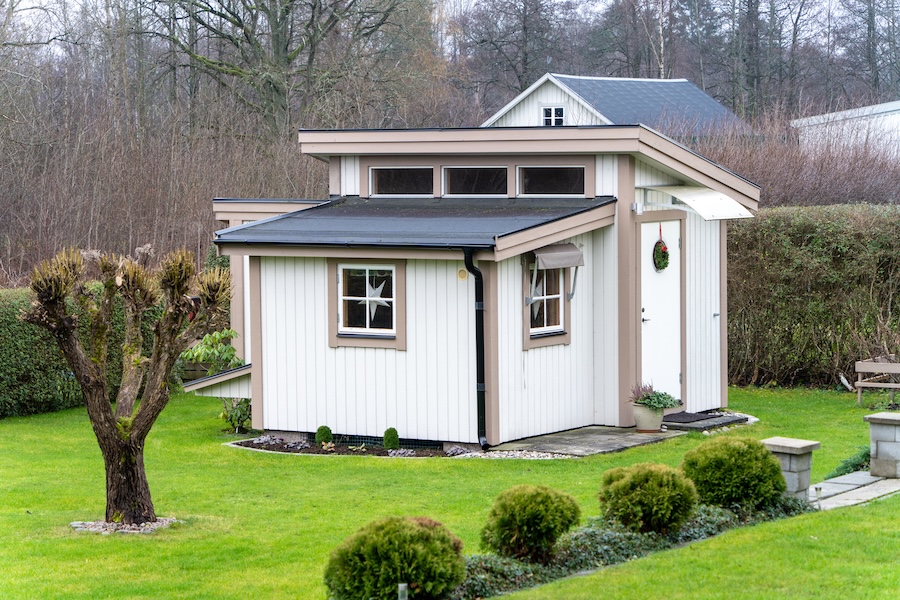
An accessory dwelling unit, whether it’s a garage apartment over a three-car bay, a basement suite carved out of unused space, or a detached cottage behind a Colonial on a half-acre lot, is one of the more scrutinized additions a homeowner can pursue. In most municipalities across Rhode Island, Massachusetts, and Connecticut, adding an ADU requires more than just a building permit. It requires a special permit, sometimes called a special use permit or special exception, issued by the local zoning board or zoning board of appeals.
Understanding what a special permit is will save you a lot of confusion. Unlike a variance, which asks a board to let you do something the zoning code prohibits, a special permit asks a board to approve a use the zoning code already allows, but only under conditions and with oversight. The distinction is important. With a variance, you’re arguing for an exception. With a special permit, you’re demonstrating that your specific project meets the criteria the code already established for this type of use.
ADUs are treated this way because they introduce a second unit of occupancy onto a lot designed and approved for one. That raises legitimate questions about parking, traffic, utility capacity, neighborhood character, and owner-occupancy. The special permit process is how municipalities ensure those questions get answered before the first framing nail goes in.
How the Special Permit Process Works
The process varies by town, but the structure is consistent enough to describe with confidence. You start by submitting an application to the local zoning board, typically including a site plan, floor plans, a description of the proposed use, and whatever supporting documentation the municipality requires. The board schedules a public hearing. Abutters are notified. The board hears testimony, asks questions, and either approves, approves with conditions, or denies the application.
What the board is evaluating isn’t just whether your plans comply with dimensional requirements. They’re making a judgment about whether the proposed ADU is consistent with the general intent of the zoning ordinance and whether it will create unreasonable adverse impacts on the surrounding neighborhood. That’s a standard with real discretion built into it.
This is why preparation matters so much. Boards that hear vague testimony about a “small apartment for family use” will ask more questions and impose more conditions than boards that hear a clear, specific presentation showing parking locations, utility connections, exterior design compatibility with the existing structure, and a thoughtful answer to every objection they’re likely to raise.
The hearing is not a formality. Neighbors can and do appear to object. Those objections carry weight. A well-prepared applicant who anticipates concerns and addresses them proactively is in a fundamentally different position than one who shows up hoping for the best.
How Rhode Island, Massachusetts, and Connecticut Approach ADU Permits Differently
State law sets the floor; local ordinance builds on top of it. In recent years, all three states have moved to make ADU approval easier at the local level, but each has taken a different path.

Rhode Island
Rhode Island enacted legislation that limits a municipality’s ability to outright prohibit ADUs on single-family lots. Towns can still regulate design, size, setbacks, and owner-occupancy requirements, but they can no longer use zoning to make ADUs effectively impossible. That said, special permit requirements remain common in Rhode Island municipalities, and the hearing process retains the same weight it has always had.

Massachusetts
Massachusetts has taken an aggressive step with the MBTA Communities Act and subsequent ADU legislation. A 2024 law now requires Massachusetts municipalities to allow at least one ADU by right on any single-family lot, meaning without a special permit, for units up to 900 square feet. However, by-right approval applies to conforming ADUs meeting specific criteria. ADUs that exceed size thresholds, require variances, or involve detached structures may still require a special permit depending on the local ordinance.

Connecticut
Connecticut has also updated its ADU statutes to expand owner options, but local zoning authority remains broader than in Massachusetts. Many Connecticut towns still require special permits for ADUs, particularly for detached units, ADUs on lots below a certain size threshold, or projects that would create a nonconforming condition.
The lesson here is that knowing your state’s statute is only the starting point. The local ordinance is where the specific requirements live, and those vary significantly from one town to the next, even within a single state.
The Mistakes That Get ADU Applications Denied
Some of the most common problems we see in ADU special permit applications are entirely avoidable.
- Incomplete applications. Many boards won’t even schedule a hearing until the application is complete, and “complete” means whatever the local ordinance specifies. Missing a drainage calculation or an owner-occupancy affidavit can push your hearing date back months.
- Site plans that don’t answer parking questions. Parking is the issue boards raise most consistently. If your application doesn’t clearly show where occupants of the ADU will park, with dimensions, a board will either ask for supplemental information or condition approval on a parking arrangement that may not work for your property.
- Underestimating neighbor opposition. An abutter who appears at a hearing with a coherent objection to drainage, traffic, or privacy can quickly shift the board’s posture. Applicants who have spoken with neighbors before the hearing and addressed legitimate concerns in their applications fare better than those who treat the hearing as a surprise encounter.
- Treating “by right” as “automatic.” Even in Massachusetts, where ADUs meeting specific criteria are now allowed by right, that doesn’t mean the building department will waive scrutiny. It means you don’t need a special permit. You still need a building permit, you still need to demonstrate compliance with the applicable requirements, and you still need to get the paperwork right.
When to Work with Legal Counsel
Not every ADU special permit application needs an attorney. A straightforward interior conversion on a conforming lot in a town with a clear, well-established ADU ordinance may proceed without complications.
But there’s a category of projects where having counsel from the beginning makes a measurable difference in outcome. If your proposed ADU requires any relief beyond the special permit, if neighbors are likely to oppose the application, if the local ordinance is ambiguous about what criteria apply, or if you’ve already received a denial and are considering an appeal, these are situations where representation changes the math.
Special permit hearings are quasi-judicial proceedings. The record created at the hearing matters for both the board’s decision and any subsequent appeal. An attorney who understands local zoning law can ensure the record contains what it needs to contain, can cross-examine objecting witnesses, and can make the legal arguments that protect your approval if it gets challenged after the fact.
At Sayer, Regan & Thayer, our real estate and land use attorneys work with homeowners and developers across Rhode Island, Massachusetts, and Connecticut on exactly these issues. If you’re planning an ADU and want to understand what the permit process looks like for your specific property and municipality, we’re glad to help you get started on the right foot.
Contact Sayer, Regan & Thayer for more information on this topic.
This article is intended for general informational purposes and does not constitute legal advice. Boundary disputes involve specific facts and legal questions that require the advice of a licensed attorney in your state. If you are planning to build an ADU, consult a real estate attorney before taking action.
Frequently Asked Questions
What is the difference between a special permit and a variance for an ADU?
A variance allows you to deviate from a zoning requirement, such as a setback or lot coverage limit, that would otherwise prohibit your project. A special permit approves a use permitted by the zoning code but requires board review and conditions. For ADUs, special permits are more common because most modern ordinances allow ADUs in residential zones, but only with oversight. If your project also creates a dimensional nonconformity, you may need both.
Do all municipalities in RI, MA, and CT require special permits for ADUs?
No. Requirements vary significantly by state and by town. Massachusetts now allows qualifying ADUs on single-family lots without a special permit under a 2024 state law. Rhode Island and Connecticut municipalities retain broader authority to require special permits, though state law limits the extent to which those requirements can be restrictive. Check your specific town’s zoning ordinance before assuming either that a permit is required or that you’re exempt.
How long does the special permit process typically take?
From application submission to a board decision, the process typically takes 2 to 5 months, depending on the municipality, the completeness of the application, and whether the board requests supplemental information or additional hearings. Applications in towns with fewer hearing dates per year or in towns that receive a high volume of applications will take longer. Appeals of denials significantly extend the timeline.
Can a neighbor appeal a special permit approval?
Yes. In Rhode Island, Massachusetts, and Connecticut, abutters and other aggrieved parties have the right to appeal a special permit approval to the superior court within a specified period, typically 20 days in Rhode Island and 20 days in Massachusetts. A strong record at the hearing level, supported by documented evidence and sound legal argument, is your best defense against a successful appeal.
What happens if my ADU application is denied?
A denial is not necessarily the end of the road. You may be able to reapply with a revised project that addresses the board’s stated concerns. You may also appeal the denial to the superior court if you believe the board applied an incorrect legal standard or made a decision unsupported by the record. The appeal deadlines are short, typically measured in days from the filing of the decision, so it’s important to consult with an attorney promptly if you’re considering that route.