
Personal Watercraft Accidents and Liability Issues
by Christopher J. McNally, Esq.
Sayer Regan & Thayer, LLP
With the weather warming up, many residents of Rhode Island, Massachusetts, and Connecticut are taking to the water. But what if an accident occurs? A maritime attorney explains who pays, who’s responsible, and why the rules on the water are not the same as the rules on the road.
What You’ll Learn
- Why federal maritime law often governs personal watercraft accidents, even on inland lakes
- How operator age and licensing requirements vary by state, and why that creates real liability exposure
- When a boat owner is legally responsible for an accident caused by someone else riding their PWC
- The most dangerous insurance gap that recreational boat owners discover only after a claim
- What to do in the first 24 hours after a personal watercraft accident to protect your legal position
The Legal Framework Around Personal Watercraft
A Jet Ski crosses a wake at 45 mph, clips an anchored kayak, and two people end up in the water. What happens next is not just a question of who was careless. It’s a question of which body of law applies, which court has jurisdiction, and who had the legal duty to prevent it.
Personal watercraft (PWC) are defined under federal law as vessels. That single fact changes everything. The moment you launch a Jet Ski, Sea-Doo, or WaveRunner on navigable waters, you have entered the world of maritime and admiralty law, a legal framework that operates largely independently of state tort law and carries its own rules about negligence, limitation of liability, and damages.
This matters because most recreational boat owners think of a PWC accident the way they think of a car accident. File an insurance claim, let the lawyers sort it out, and move on. The reality is more complicated. Maritime law creates duties and liabilities that exist whether you know about them or not, and the gaps between what people assume and what the law requires tend to be expensive.
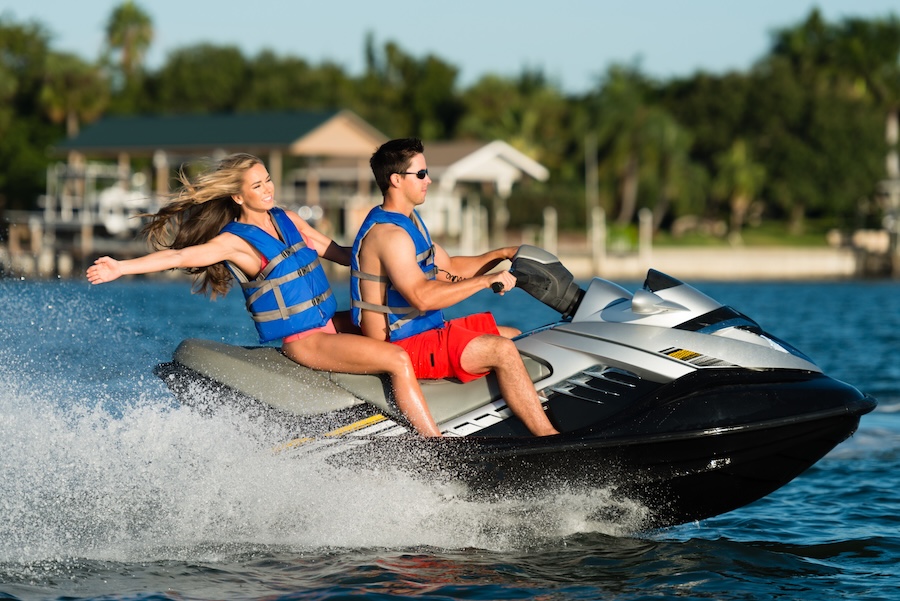
Operator Liability: Negligence on the Water Has a Specific Meaning
Under maritime law, the standard for negligence is essentially the same as it is everywhere else: did the operator fail to act as a reasonably prudent person would under the circumstances? The difference is that on navigable waters, “the circumstances” are defined by a dense body of federal regulation, Coast Guard rules, and case law going back 150 years.
Speed is the most obvious issue. Operating a PWC at high speed in a congested swim area is, on its face, negligent. But negligence also encompasses failing to maintain a proper lookout, failing to yield the right of way according to the Navigation Rules, operating recklessly in restricted visibility, or ignoring wake restrictions in marked zones.
Here is the practical reality: if you are the PWC operator involved in a collision or injury, your exposure under maritime negligence theory is significant. Federal courts have discretion in awarding general damages, economic damages, and, in some cases, punitive damages when conduct is egregious. The “it was just an accident” defense is not a legal defense. The question is whether you exercised reasonable care, not whether you intended the outcome.
State-level criminal or civil boating regulations can run parallel to maritime claims. In Massachusetts, for example, operating a motorized vessel negligently and causing serious injury is a criminal offense. You can face both a civil maritime claim and a state criminal charge from the same accident.
Owner Liability: Lending Your PWC Is a Legal Act
This is where many boat owners are genuinely surprised. You let your neighbor’s 19-year-old son take the Jet Ski out for an hour. He’s been on the water before, he seemed responsible, and you needed an afternoon off. Three hours later, he’s rear-ended a paddleboarder, and you are named in a lawsuit.
Under the doctrine of negligent entrustment, a vessel owner can be held liable for injuries caused by a person they allowed to operate the vessel if the owner knew or should have known that the operator was incompetent, inexperienced, or otherwise unfit. That 19-year-old with no boating safety certificate, operating a 70-mph watercraft he’s never ridden before, in a busy bay on a holiday weekend? A plaintiff’s attorney will build a compelling negligent entrustment case out of exactly those facts.
Most states require PWC operators to be at least 16 years old, and many require operators under 18 to complete a boating safety course approved by the National Association of State Boating Law Administrators (NASBLA). If you lend your PWC to someone who does not meet these requirements, you are not just morally responsible for what happens. You may also be legally responsible.
There is also the separate doctrine of vicarious liability in certain ownership structures. If a PWC is registered to an LLC or business entity, the circumstances of its use become relevant to who is exposed in litigation.

Insurance Gaps: The Problem Most Owners Discover Too Late
Standard homeowner’s insurance policies typically exclude liability for motorized watercraft above a certain horsepower, and virtually every PWC on the market today exceeds that threshold. Your homeowner’s policy almost certainly does not cover you for a PWC accident. If you have never added a separate watercraft endorsement or a standalone boat owner’s policy, you may be entirely uninsured for these claims.
Boat owners’ policies are better, but they require careful reading. Many have geographic restrictions (they cover “inland waters” but not “coastal or open ocean” use), passenger exclusions for certain injury types, or sub-limits on liability that may not reflect the true cost of serious maritime injuries. A traumatic brain injury in open water, with emergency helicopter transport, extended hospitalization, and long-term care, can exceed a $300,000 policy limit before you finish your deposition.
Umbrella policies can fill the gap, but only if they are written to cover watercraft liability. Many standard personal umbrella policies exclude boats entirely, a fact buried in the endorsements that most people never read until they need to.
The takeaway: review your current coverage with an agent who understands maritime risk, not just one who sells you the product. Ask specifically whether your PWC is covered, where it’s covered, and what the per-occurrence limit looks like relative to the potential severity of a maritime personal injury claim.
After an Accident: The First 24 Hours Matter
If you are involved in a PWC accident that results in injury or significant property damage, federal law requires you to stop, render assistance, and report the accident. Under 33 CFR Part 173, accidents involving death, disappearance, injury requiring medical attention beyond first aid, or property damage over $2,000 must be reported to the appropriate state authority within a specific timeframe (typically 48 hours for injury or death, 10 days for property damage only).
Failure to report is itself a federal violation and will be used against you in civil litigation. Attempting to minimize what happened, leaving the scene, or discouraging witnesses from speaking with investigators will turn a negligence claim into something much worse.
What you should do immediately: render any necessary assistance, call the Coast Guard or local marine patrol, document the scene with photos if possible, collect witness contact information, and contact a maritime attorney before you give any recorded statement to an insurance adjuster or law enforcement. The statements you make in the first 24 hours are discoverable in litigation, and they tend to be made at the worst possible moment, when you are stressed, scared, and not thinking about legal consequences.
Contact Sayer, Regan & Thayer for more information on this topic.
This article is intended for general informational purposes and does not constitute legal advice. If you have been involved in a personal watercraft accident or have questions about maritime liability, consult a licensed maritime attorney in your jurisdiction.
Frequently Asked Questions
Does federal maritime law apply to accidents on a private lake?
It depends on whether the lake is “navigable waters of the United States” under federal law. The definition is broader than most people expect. If a body of water is capable of being used in interstate commerce, even historically, federal maritime jurisdiction may apply. Many large reservoirs and interconnected lake systems qualify. Truly landlocked private ponds generally do not, but if you are unsure, consult a maritime attorney before assuming state law is your only exposure.
What if the person injured was a passenger on my PWC?
Passengers on a personal watercraft are considered guests aboard a vessel under maritime law. In general, you owe them a duty of reasonable care. If a passenger is injured due to your negligent operation, you face personal injury liability. Some states have “guest statutes” that complicate this for non-paying passengers, but federal maritime law has largely displaced these in admiralty jurisdiction cases. The short answer: carrying a passenger does not insulate you from liability; it extends it.
Can my liability be limited under the Limitation of Liability Act?
The federal Limitation of Liability Act allows a vessel owner to limit their liability to the post-accident value of the vessel in certain circumstances, provided the negligence occurred without the owner’s “privity or knowledge.” This doctrine was designed for commercial shipping but technically applies to recreational vessels. For PWC accidents, however, the limitation fund (often just the value of the wrecked watercraft) is frequently insufficient relative to the injuries, and courts have discretion in how they apply the doctrine. It is worth exploring with counsel, but it is not a reliable escape hatch.
What if the at-fault operator was a minor?
The minor and their parents may both face liability. Under many state statutes, a parent who signs a minor’s boating safety certification or permits a minor to operate a vessel can be held responsible for damages caused by that minor’s operation. In maritime negligence cases, courts look at whether the supervising adult exercised reasonable control and oversight. If your 15-year-old took the PWC out without your knowledge, that goes to your lack of privity for limitation purposes. If you handed them the key, the analysis would be very different.