

Elder Law & Medicaid Planning: Frequently Asked Questions
Sayer Regan & Thayer, LLP
What You’ll Learn
- How Medicaid planning protects assets you’ve worked a lifetime to build
- What the five-year lookback rule means and when exceptions apply
- How crisis planning works when someone has already entered a nursing home
- What advance directives are and why they matter in elder law
- How trusts can help with Medicaid eligibility and probate avoidance
- What guardianships involve and when they become necessary
- How to protect a family vacation home for future generations
- What long-term care planning covers beyond just nursing home costs
What is elder law and who needs it?
Elder law covers the legal and financial issues that come up as people age. That includes Medicaid planning, long-term care planning, estate planning, guardianships, asset protection, and advance directives.
You need elder law planning if you or a family member is facing the possibility of long-term care, whether in a nursing home, assisted living, or at home with professional caregivers. You also need it if you’re helping aging parents navigate healthcare decisions, or if you want to protect assets you’ve built over a lifetime from being entirely spent on care costs.
The earlier you start planning, the more options you have. But even if someone has already entered a nursing home or started receiving care, there are still strategies available.
How do Sayer Regan & Thayer’s elder law attorneys help families?
We help individuals and families understand Medicaid and Medicare laws, protect assets, complete trust planning when appropriate, handle estate planning including advance directives, and figure out how to properly care for aging loved ones.
We meet clients where they are. If someone can’t come to our office because they’re in a nursing home, assisted living, hospital, or at home, we’ll come to them. Elder law situations often move quickly and families need guidance without delay.

Does needing long-term care mean losing all your assets?
No. This is one of the biggest misconceptions about long-term care and Medicaid. Needing nursing home care does not mean all your assets will be exhausted.
There are planning strategies available even after someone has entered a nursing home or started receiving care. We help families preserve assets through crisis planning, proper use of Medicaid rules, and exceptions to the five-year lookback rule that can be applied in certain situations.
The goal is to help you qualify for Medicaid to cover care costs while preserving assets for the healthy spouse or for future generations.
What is Medicaid planning and when should it start?
Medicaid planning is structuring your assets and income to qualify for Medicaid coverage of long-term care while preserving as much as possible for your spouse or family.
Medicaid is a needs-based program. To qualify, you generally can’t have more than a small amount of countable assets. But there are strategies to protect assets legally, including trusts, asset transfers, spousal protections, and spending down assets in ways that benefit you or your family while establishing Medicaid eligibility.
Ideally, Medicaid planning starts years before you need care. That gives you the most flexibility. But even last-minute planning can preserve significant assets if you know the rules and exceptions.
What is the five-year lookback rule?
When you apply for Medicaid to cover nursing home care, Medicaid looks back at the previous five years of financial transactions. If you gave away assets or sold them for less than fair market value during that period, Medicaid can impose a penalty period during which you’re ineligible for coverage.
The penalty period is calculated based on the value of assets transferred divided by the average monthly cost of nursing home care in Rhode Island. If you gave away $100,000 and the average monthly cost is $10,000, you’d face a 10-month penalty period.
This is why advance planning matters. Transfers made more than five years before applying for Medicaid don’t create penalties.
Are there exceptions to the five-year lookback rule?
Yes. Several exceptions can be used to preserve assets even at the last minute, after someone has entered a nursing home.
Some transfers are exempt from the lookback rule entirely. Others create no penalty even if made within five years. These exceptions include transfers to certain family members, transfers of the home under specific circumstances, and certain types of trusts.
The rules are technical and the exceptions are fact-specific. What works in one family’s situation may not work in another’s. We analyze your specific circumstances and identify which exceptions apply.
What is crisis planning and how does it work?
Crisis planning happens when someone needs nursing home care immediately or has already entered a facility, and the family hasn’t done advance planning.
Even in a crisis, we can often preserve a significant portion of assets. Crisis planning uses spousal protections under Medicaid law, last-minute transfers that qualify for exceptions, spend-down strategies that benefit the family, and proper structuring of income and assets between spouses.
The key is acting quickly and getting advice from an attorney who knows Medicaid rules. Mistakes made in crisis situations can be expensive and hard to fix.
How does asset preservation work under Medicaid rules?
Asset preservation means structuring what you own so you qualify for Medicaid while keeping as much as legally possible for your spouse or family.
For married couples, Medicaid has spousal protections. The healthy spouse (community spouse) can keep the home, a car, and a significant amount of assets. The rules about how much the community spouse can keep are complex and vary based on circumstances.
For single individuals, options include using exempt assets (things Medicaid doesn’t count), making penalty-free transfers, establishing certain types of trusts, and converting countable assets to non-countable ones through proper spending.
We help families understand what they can keep, what they need to spend or transfer, and how to do it without triggering penalties.
What role do trusts play in elder law and Medicaid planning?
Trusts serve several purposes in elder law. They can help you qualify for Medicaid, avoid probate, protect assets for future generations, and minimize taxes.
Irrevocable trusts for Medicaid planning: If you transfer assets to a properly structured irrevocable trust more than five years before applying for Medicaid, those assets generally won’t count against you. The five-year clock starts when you transfer assets into the trust, not when you create it.
Revocable trusts for probate avoidance: These don’t help with Medicaid eligibility because you still control the assets. But they keep your estate out of probate and provide for asset management if you become incapacitated.
Special needs trusts: For disabled beneficiaries who receive government benefits, these trusts provide for their care without disqualifying them from Medicaid or SSI.
Testamentary trusts in wills: Can protect assets for beneficiaries who may need Medicaid in the future.
The type of trust you need depends on your goals. Medicaid planning usually involves irrevocable trusts, but those come with tradeoffs. You give up control and access to those assets.
What are advance directives and why do they matter?
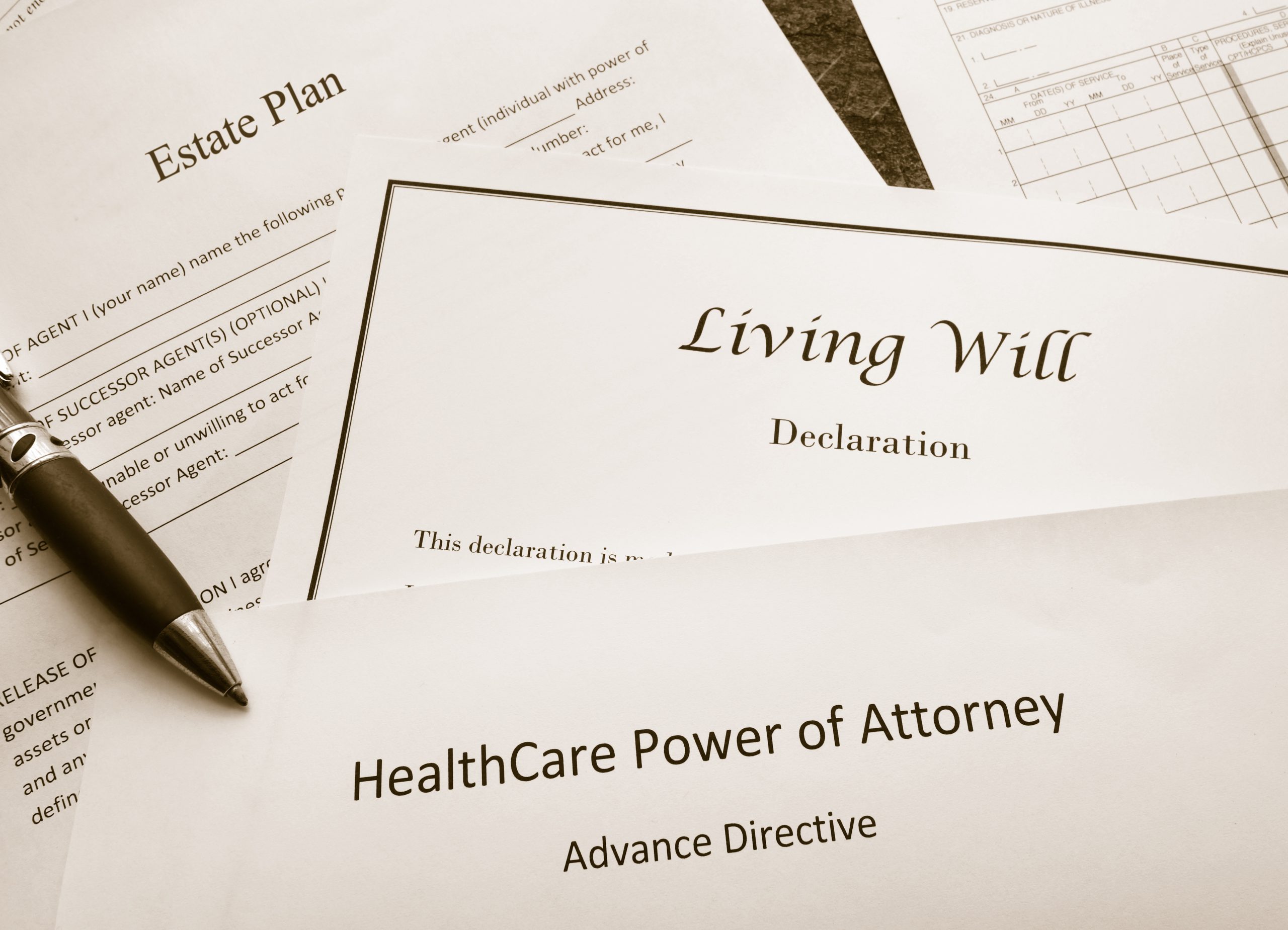
Advance directives are legal documents that express your wishes for medical care if you become unable to make decisions yourself. They include living wills and healthcare powers of attorney.
Healthcare power of attorney: Names someone to make medical decisions for you if you can’t make them yourself. Without this, your family may need to go to court to get authority to make decisions.
Living will: States what life-sustaining treatment you do or do not want if you’re terminally ill or in a persistent vegetative state. This prevents your family from having to guess what you would want.
HIPAA authorization: Allows your healthcare agent and family members to access your medical records and talk to doctors.
These documents are part of every good estate plan, but they’re particularly important in elder law where health crises often happen suddenly.
What is long-term care planning?
Long-term care planning means preparing for the possibility that you’ll need help with daily activities like bathing, dressing, eating, or taking medication. That care might be in a nursing home, assisted living, or at home with professional caregivers.
Long-term care planning covers:
- Evaluating long-term care insurance options
- Understanding what Medicare covers (very little long-term care) versus what Medicaid covers
- Planning for how to pay for care
- Considering where you want to receive care
- Making sure you have legal documents in place (powers of attorney, advance directives)
- Protecting assets so care costs don’t exhaust everything you’ve built
The cost of long-term care in Rhode Island can easily exceed $10,000 per month for nursing home care, more for higher levels of care or private facilities. Without planning, those costs can deplete a lifetime of savings quickly.
What is a guardianship and when is it necessary?
A guardianship (also called conservatorship) is a court proceeding where a judge appoints someone to make decisions for a person who can no longer make decisions for themselves.
Guardianships become necessary when someone has dementia, severe illness, or disability that prevents them from managing their affairs, and they didn’t execute a power of attorney before becoming incapacitated.
Guardian of the person: Makes healthcare and personal decisions.
Guardian of the property (conservator): Manages financial affairs.
One person can serve both roles, or they can be split between two people.
Guardianships involve court oversight, annual accountings, and can be expensive and time-consuming. They’re also public proceedings, unlike powers of attorney which are private.
The best way to avoid guardianship is to execute durable powers of attorney for healthcare and finances while you’re still able to do so. If you have those documents in place, your family won’t need to go to court.
We handle guardianship petitions when they’re necessary, but we strongly prefer to help families avoid them through proper advance planning.
How can we save the family vacation home for future generations?
Family vacation homes create special challenges in elder law and estate planning. You want to keep the property in the family, but it can create problems for Medicaid eligibility if someone needs nursing home care.
Options for protecting a vacation home include:
Transferring it more than five years before needing Medicaid: Gets it out of your estate for Medicaid purposes, but you lose control and the ability to live there or use it as you please.
Irrevocable trust: Transfer the home to a trust that benefits your children or grandchildren. After five years, it won’t count for Medicaid. The trust can allow you to use the home during your lifetime.
Life estate: Transfer ownership to your children but keep a life estate that lets you use the property for life. This can work for Medicaid planning but has tax implications.
LLC or family partnership: Structure ownership through an entity with proper operating agreements addressing use, maintenance costs, and future transfers.
Each approach has different tax consequences, Medicaid implications, and practical considerations about who can use the property and who pays for upkeep. We help families think through these issues and structure ownership to meet their goals.
What’s the difference between Medicare and Medicaid for long-term care?
This is one of the most common sources of confusion in elder law.
Medicare is federal health insurance for people 65 and older or with certain disabilities. It covers hospital stays, doctor visits, and short-term rehabilitation after a hospital stay. Medicare does NOT pay for long-term nursing home care or ongoing custodial care. It only covers up to 100 days of skilled nursing facility care following a hospitalization, and full coverage is only for the first 20 days.
Medicaid is a needs-based program jointly funded by federal and state governments. It pays for long-term nursing home care and some home and community-based care. But you have to meet strict asset and income limits to qualify.
Most people assume Medicare will cover nursing home care. It won’t. That’s why Medicaid planning is so important.
What happens to my spouse if I need nursing home care?
Medicaid has special protections for the spouse who remains in the community (the “community spouse”) when the other spouse enters a nursing home.
The community spouse can keep:
- The home
- One car
- Personal belongings and household goods
- A significant amount of assets (the Community Spouse Resource Allowance, which varies based on circumstances but can be over $150,000)
- Enough income to live on (Minimum Monthly Maintenance Needs Allowance)
These protections prevent the community spouse from being impoverished while the nursing home spouse gets Medicaid coverage.
The rules are complicated and the amounts change annually. We help married couples maximize what the community spouse can keep while qualifying the nursing home spouse for Medicaid.
Can we do elder law planning if someone is already in a nursing home?
Yes. Many families don’t seek legal advice until someone has already entered a facility and the bills are piling up. We can still help.
Crisis planning after nursing home admission uses:
- Spousal protections to preserve assets for the community spouse
- Exceptions to the lookback rule
- Strategic spend-down of assets
- Transfers that don’t create penalties
- Proper application for Medicaid with full use of allowances and deductions
The sooner you come in after nursing home admission, the more we can usually preserve. But even if someone has been in a facility for months and has been paying privately, there may still be options.
Does elder law work overlap with your other practice areas?
Yes, and that’s helpful for families dealing with aging and long-term care issues.
Elder law overlaps with estate planning (wills, trusts, powers of attorney, advance directives). It involves real estate law when protecting the family home or vacation property. It can require probate work when managing a deceased person’s estate. Guardianships are court proceedings. Some families need land use and zoning help if they want to add an accessory dwelling for aging parents.
Because Sayer Regan & Thayer handles all these areas, elder law clients can get comprehensive help without coordinating between multiple firms.
To talk with one of our Elder Law attorneys
To talk with one of our elder law attorneys, call our Newport office at 401-849-3040 or our Wakefield office at 401-789-1616. Home visits and visits to nursing homes, assisted living facilities, or hospitals are available if needed.